


You do not need a cupboard full of specialty products to keep your kitchen clean. Most of the time, it comes down to having a small set of tools that actually get used. These are the cleaning supplies I keep on hand all the time in my kitchen cleaning kit. They are simple, reliable, and make it easier to stay on top of daily messes without overthinking it, and most importantly, without spending a ton of unnecessary money.
Dish Soap
If I could only pick one cleaner to keep in the kitchen, this would be it. A basic grease cutting dish soap works for way more than just washing dishes. I use it to spot clean sticky spots on the counter, wipe down the stove, or mix into other homemade cleaners.
Stick with something simple like original blue Dawn or a fragrance free version if you are sensitive to scent. Avoid anything labeled as moisturizing since those usually leave a film behind.
You can also mix a few drops into a spray bottle with water for a quick and easy surface cleaner that works in a pinch.
All Purpose Cleaner
While dish soap and water can be used to make your own homemade cleaner, I still like to keep a bottle of all purpose cleaner from the store around too. It is good for wiping down counters, cabinet doors, sinks, door handles, and just about anything else that needs a quick clean.
Just be sure not to use all purpose cleaner on natural stone like granite or marble, since it can damage the surface over time.

Baking Soda
Baking soda is one of those staples I always have around because it works for all kinds of cleaning jobs. It has just enough grit to help with scrubbing, but it will not scratch most surfaces.
I use it to clean the inside of the oven, freshen up the sink drain, or scrub away tough spots on the stovetop. Just sprinkle a little directly onto the surface or make a paste with warm water if you need more power.
It also works well with dish soap when you want a little extra cleaning boost without reaching for something harsh. I keep mine in a small storage container so it is easy to grab and use without making a mess.

White Vinegar
White vinegar is one of the most useful things you can keep in your kitchen cleaning kit. It breaks down buildup, wipes away grime, and helps eliminate odors without harsh chemicals.
I use it on glass, faucets, sealed floors, and inside the fridge. Just mix it with water in a spray bottle and you’ve got an easy cleaner that works on a lot of different surfaces.
It also works well for soaking paper towels and wrapping them around crusty faucet bases. After a few hours, the mineral deposits wipe right off. Just avoid using vinegar on natural stone like granite or marble, since the acid can dull or damage the surface.
Mild Abrasive Cleanser
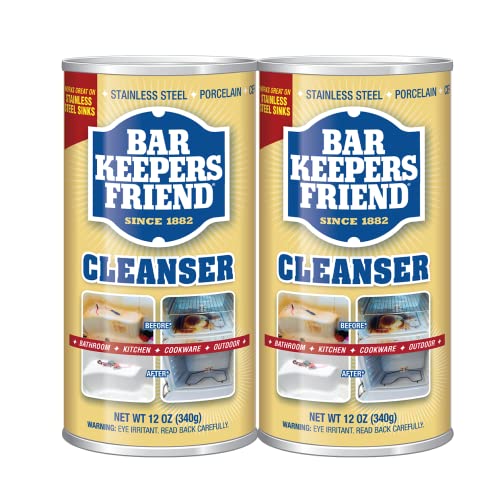
This is the one I pull out when baking soda is not quite enough. A mild abrasive cleanser helps with tougher spots, especially in stainless steel sinks or around the stove where things get cooked on and crusty.
I use it sparingly and only on surfaces I know can handle it. It is great for scuff marks, soap scum, and other grime that needs a little more effort to remove. This is my favorite option to use in the kitchen and around the house in general.

Just make sure to rinse everything really well after using it so there is no powdery residue left behind.
Glass Cleaner
I keep a bottle of glass cleaner under the sink for anything that needs to shine without streaks. It works best on mirrors, windows, microwave doors, and oven glass. This is my go-to option for store bought.
You can also use it to wipe down stainless steel if you are in a pinch, but I mostly stick to using it on smooth, reflective surfaces.
If you want to skip the store bought version, vinegar and water works too. Just spray it on and wipe with a clean microfiber cloth for a clear, streak free finish.

Fresh and Used Sponges
It’s always a good idea to keep a few sponges on hand. One for everyday dishwashing and a couple of older ones for the messier jobs. Once a sponge gets too worn out for dishes, I move it over to cleaning the oven, inside the trash can, or anything else that does not need to be perfectly sanitary.
Just make sure you are not using the same sponge for both dishes and dirtier jobs. I always keep the clean ones separate so I know exactly which is which. When it starts to smell or fall apart, I toss it and grab a new one.
I’ve found these sponges to be some of the best. They last an incredibly long time and can be used on a variety of materials.

Cleaning Cloths and Paper Towels
I use a mix of microfiber cloths, old cotton rags, and paper towels depending on the job. Microfiber is my go to for most surfaces because it grabs dust and wipes clean without leaving streaks. I keep a small stack folded under the sink so they are easy to grab when I need one.
Old white cloths are great for dirtier jobs where you do not want to ruin a good towel. And for anything greasy or messy that I do not want to wash, I just use a paper towel and throw it away. It is not fancy, but it works.
Kitchen Cleaning Brushes
I keep a basic brush next to the sink for scrubbing pots and pans. It is a lot easier to use on stuck on food than a sponge and holds up way longer. I use it almost every day for dishes that need a little more effort.
I also keep a separate bottle brush for cleaning inside water bottles, thermoses, and other narrow containers. It gets into spots that are hard to reach and makes sure everything gets a proper clean.
Rubber Gloves
A pair of rubber gloves is a must for when I need to use hot water or clean with something that might irritate my hands. They are great for dishwashing, deep cleaning the sink, or anything that takes a little more time and scrubbing.
Wearing gloves keeps my hands from getting dried out and makes it easier to clean without stopping every few minutes to rinse or wipe. I only use them for kitchen cleaning and always keep them separate from anything else, like the rubber gloves I use for the bathroom.
Scouring Utility Pad
Scouring utility pads come in handy when something needs more scrubbing than a sponge can handle. I keep both white and green ones on hand. The white pads are non-abrasive and perfect for surfaces that scratch easily, while the green ones are more heavy duty and better for tougher messes, like stuck on food or gunk around the sink.

I only use these on surfaces I know can handle it. They are not something I reach for every day, but when I need them, they work.

Toothbrush
I always keep an old toothbrush in my kitchen cleaning supplies. While it might seem a little weird at first, I find it to be the easiest way to clean small, detailed areas that nothing else can really get into. I use it around faucet edges, inside tight corners, and anywhere grime builds up that a sponge or cloth cannot reach.
It does not get used often, but when I need it, there is nothing better. Just rinse it out after each use and keep it separate so it is only used for cleaning and nothing else.
That’s all it takes to build a cleaning kit that actually works.


