


Mold on wood is more common than most people realize, especially in places that stay damp or do not get much airflow. You might spot it on a windowsill, basement shelf, or around a leaky pipe. And while some cases are simple to clean up, others are not something you want to mess with yourself.
The tricky part is knowing the difference. A little surface mold on finished wood might be no big deal. But if it has spread, soaked into the grain, or keeps coming back, there is more going on underneath.
In this guide, I will walk through how to tell if you can handle it on your own, what to use, what to avoid, and when to stop and bring in help.

When You Can Clean Mold Off Wood Yourself
Not every mold problem means you need to call in a professional. If the spot is small and the wood is still solid, you can usually clean it yourself. I am talking about surface mold on things like painted trim, a windowsill, or a finished piece of furniture.
The key is knowing when the mold is just sitting on the surface and not growing deep inside. If the wood feels dry, the area is less than ten square feet, and you can see exactly where the mold starts and ends, it is probably safe to clean.
Just make sure the mold is not near anything structural, like floor joists or beams. If it is in an area that gets wet often, like under a sink or near a leaky window, you will want to keep an eye on it afterward in case it comes back.
This kind of light cleanup is more about staying ahead of a problem than fixing serious damage. If anything about it feels off, it is better to stop and reassess than try to force it.
When You Should Not Try to Clean It Yourself
Of course, not every mold situation is something you can or should take on yourself. If the wood feels soft, smells musty, or the mold keeps coming back no matter how many times you clean it, that usually means it has soaked in deeper than you can reach.
I do not mess with mold that is growing on anything structural, like subfloors, joists, or inside walls. Same thing if it covers a large area or you can smell it but cannot see where it is coming from. That is a sign it has already spread into places you cannot reach.
Another red flag is water damage. If the wood is discolored, warped, or crumbling, the mold is probably the least of your problems at that point. That is when I call a professional and let them figure out how far it has gone.
Trying to clean something like that usually just stirs it up and makes it worse. You are better off getting help before it turns into a bigger repair job later.
What You Need
If the mold is light and the wood is still in good shape, you do not need anything complicated to clean it up. Just make sure you are using a cleaner that is actually meant for this kind of job. Most homemade mixtures or all purpose sprays will not cut it.
Here is what I use:
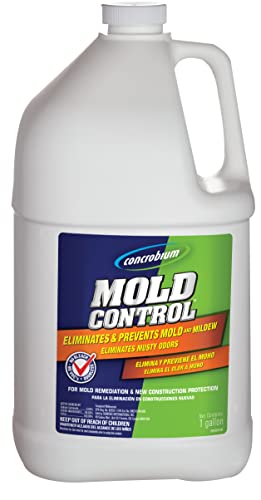
- Concrobium Mold Control or RMR-141
- Spray bottle if your cleaner does not come with one
- Soft or medium brush
- A few clean cloths or old towels
- Gloves, an N95 mask, and eye protection
- A fan or dehumidifier to dry everything out
- Plastic sheeting or a drop cloth if you are working indoors

You do not need to mix anything. Just follow the instructions on the product label and keep the area well ventilated while you work.
Step by Step Process to Remove Mold from Wood
Once you have your list of items ready, follow these simple steps to clean mold from wood.
Step 1: Set Up Your Space
Open a window or work outside if you can. If you are indoors, close the door to other rooms and set up a fan to blow air out. Mold spores can float around while you clean, so I always wear gloves, a mask, and eye protection.
Step 2: Apply the Mold Cleaner
Spray Concrobium or RMR 141 directly onto the moldy area. You want the surface to be fully coated, but do not soak the wood. Let it sit for ten to fifteen minutes so it can start to break the mold down.
Step 3: Scrub the Surface
Use a soft or medium brush to gently scrub the mold off the surface. Do not press too hard or you might push the mold deeper into the wood grain. Just enough to lift what is there.
Step 4: Wipe It Clean
Take a clean cloth and wipe away the mold and any leftover cleaner. Then go over it again with a dry towel. This helps get any moisture off the surface and keeps it from staying damp.
Step 5: Dry It Out Completely
Once it is wiped down, let the area air dry fully. I usually set up a fan or run a dehumidifier nearby to help it along. If the wood stays even a little damp, the mold will come right back.
Why Vinegar Will Not Work
Vinegar gets mentioned a lot as a mold cleaner, but I suggest you steer clear of using it. The issue is that wood is a porous material. Mold does not just stay on the surface. It can sink into the grain where vinegar cannot reach.
Even if the surface looks clean afterward, there may still be active mold inside. That is why it often shows up again later, especially in areas that stay humid or do not dry out completely.
Vinegar might be fine for nonporous surfaces like tile or glass, but when it comes to wood, you need something that is designed to soak in and deal with the problem below the surface.
How to Prevent Mold from Coming Back
Once the mold is gone, the main thing you need to do is keep the area dry. Mold does not grow without moisture, so the goal is to make sure the conditions that caused it do not come back.
In basements or bathrooms, I use a dehumidifier to keep the humidity low. I also try to keep air moving with fans or by cracking a window when the weather allows.
If the mold was caused by a leak, make sure the leak is completely fixed and the wood is fully dry before sealing anything up. You do not want to trap moisture inside.
For unfinished wood in damp areas, I like to seal it with a clear finish to help keep moisture out. I have done this with basement shelves and trim near windows that tend to get wet.
Mold cleaner is only part of the solution. Keeping the space dry is what actually stops the mold from coming back.


